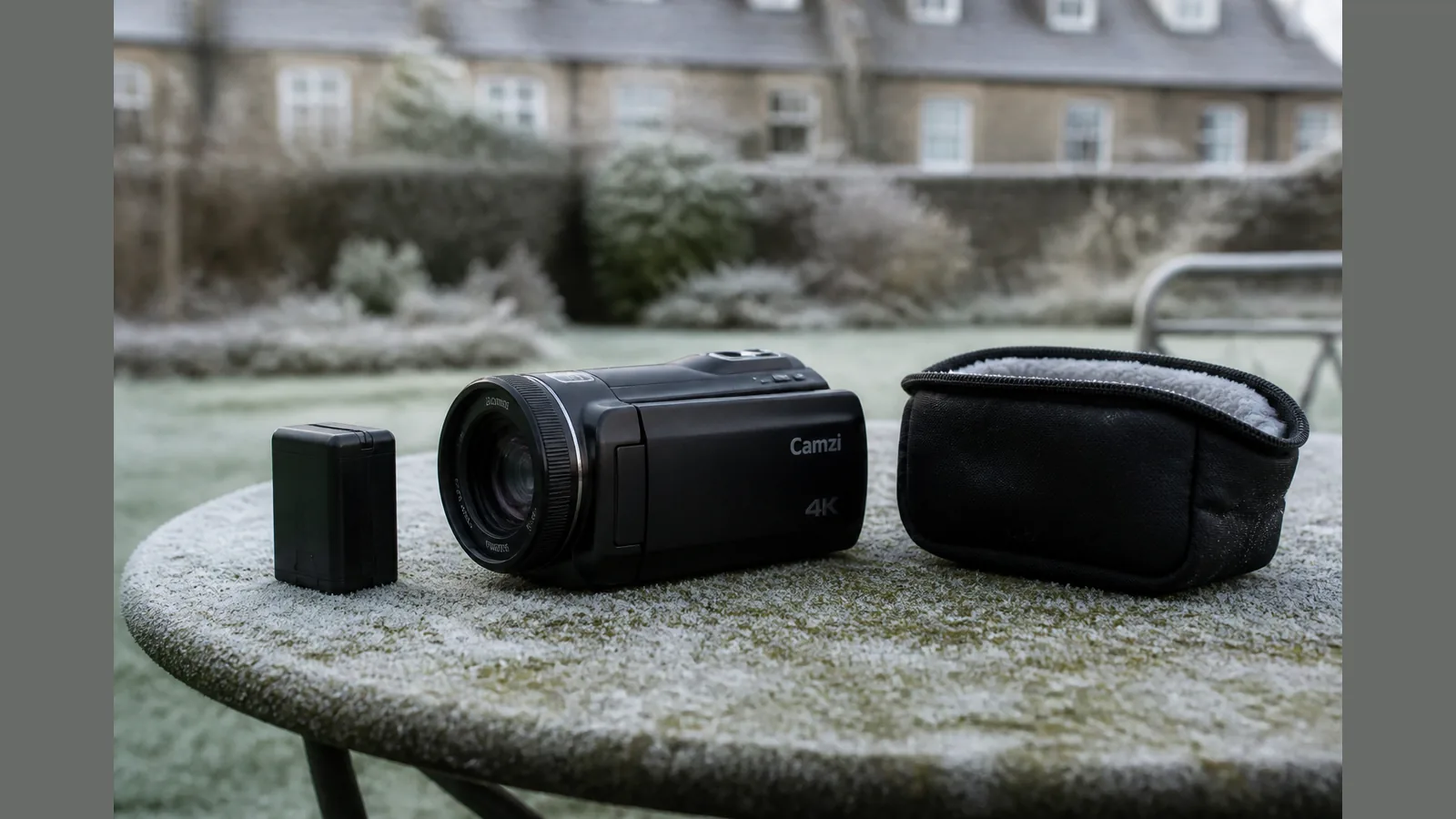
winter camcorder battery tips UK cold
Practical winter camcorder battery tips UK cold start with warmth and moisture control: spare batteries stay warmer in an inside pocket, screen use is kept brief in freezing air, and the camcorder is bagged before you step indoors so condensation does not form on cold surfaces.
Cold batteries drain faster—pack spares warm
Cold weather reduces battery efficiency, so power can fall away faster than on a mild day. Pack fully charged spares and keep them in an inner pocket close to your body until you need a swap. Reduce how long the LCD stays on when you are outdoors, since the display adds to power draw in the cold.
When filming with a compact vlogging camcorder such as the FIREFOTO 4K Video Camera Camcorder (42MP, 18X digital zoom, 3.0 inch 270° flip screen, WiFi, microphone and LED light), treat battery warmth as part of the kit routine rather than an afterthought.
Condensation control when moving indoors
Moving a cold camcorder straight into a warm hall, café or car invites condensation on and inside the gear. That moisture can damage electronics if it forms where you cannot wipe it away.
Before you go indoors, place the camcorder in a sealed bag or case while it is still cold, then let it warm up gradually inside the bag. Only open the bag once the kit has reached room temperature. The same habit helps when condensation when bringing camcorder indoors is a recurring risk at UK winter events.
Flip screen and button use with gloves
Thick gloves make flip screens and small controls harder to use, which often leads to longer outdoor fiddling and more battery drain. Practise opening the 270° flip screen and framing with the gloves you will wear on the day. Prefer simple button presses over long menu browsing in the cold, and close the screen when you are not reviewing a take.
If you need the LED light or an external microphone, attach and check them under shelter before you start, so you are not swapping cold batteries and accessories in the open.
Event-day winter kit list
Use this outdoor event filming cold weather checklist UK as a quick pre-shoot pass:
- Two or more charged batteries, with spares kept warm in an inside pocket
- A sealed bag or case for gradual warm-up when moving indoors
- A dry microfibre cloth for external moisture only (never force a cold unit open indoors)
- Gloves you can operate the flip screen and record controls with
- Microphone and LED light fitted and tested before you step outside
- A simple power plan: shorter LCD checks, spare swaps between takes
What not to claim about runtime numbers
Cold conditions vary by wind, temperature and how often you use the screen, so do not treat any single runtime figure as a promise for winter days. Avoid quoting lab minutes, codec or bitrate claims, or optical-zoom language: this model’s zoom is digital only. Stick to habits you can control—warm spares, brief screen use and condensation discipline—rather than invented performance numbers.
FAQ and CTA
Why keep spare batteries in an inside pocket?
Body heat helps keep spare battery warm in inside pocket storage, which supports more reliable swaps when outdoor cold is sapping power from the pack already in the camcorder.
What is the safest way to bring a camcorder indoors?
Bag it first, warm it up sealed, then open it—so you limit condensation when bringing camcorder indoors after a cold shoot.
Ready to check the kit?
Review the current product details for the FIREFOTO 4K vlogging camcorder before your next cold-weather event shoot.